The law
The Magnuson-Moss Warranty Act Explained: Your Warranty Rights in Plain English
The Magnuson-Moss Warranty Act makes written warranties enforceable, bans warranty void if removed tricks, and can make the company pay your lawyer. How it works and when to sue.

The Magnuson-Moss Warranty Act is the 1975 federal law that makes written warranties on consumer products enforceable in court, stops companies from voiding warranties because you used other brands of parts or repair shops, and lets you recover your attorney fees if you win a warranty case. It does not force any company to offer a warranty, but once a company does, the Act sets rules for how the warranty is written, what it must cover, and what happens when the company does not honor it.
This guide covers what the Act requires, the difference between full and limited warranties, the "warranty void if removed" problem, how to sue, and how the Act shows up in defect class actions.
Key takeaways.
- The Magnuson-Moss Warranty Act (15 U.S.C. 2301 to 2312), signed January 4, 1975, governs written warranties on consumer products.
- No company has to offer a warranty, but if it does, a warranty on a product over $10 must be labeled "full" or "limited," and the company cannot then disclaim implied warranties.
- A company generally cannot void your warranty because you used third-party parts or an independent repair shop.
- If you win, the court can order the company to pay your attorney fees, which is what makes small warranty claims worth bringing.
- Federal court class actions under the Act need at least 100 named plaintiffs and $50,000 in total claims; otherwise the claim goes to state court.
What the Magnuson-Moss Warranty Act covers
The Act applies to consumer products: tangible personal property normally used for personal, family, or household purposes, including things installed in a home, like a water heater or HVAC system. Cars, appliances, electronics, furniture, and tools all qualify. It does not cover services alone or products bought only for business use.
It governs three kinds of promises:
- Written warranties: the manufacturer's or seller's written promise that a product is free of defects or will be repaired or replaced if it fails.
- Implied warranties: promises that state law reads into every sale, such as the warranty of merchantability (the product works for its ordinary purpose).
- Service contracts: extended warranties and protection plans you pay extra for.
The Act does not require any company to offer a written warranty; it sets the rules only once a company chooses to give one. The Federal Trade Commission enforces it and wrote rules requiring warranty terms to be disclosed in one document and made available before purchase for products costing more than $15.
Full warranty vs. limited warranty
Under Section 102 of the Act, every written warranty on a consumer product costing more than $10 must carry a title saying it is either "full" or "limited." The label tells you, at a glance, how strong the promise is.
| Feature | Full warranty | Limited warranty |
|---|---|---|
| Repair defects free within a reasonable time | Required | Only as written |
| Refund or replacement after repeated failed repairs | Your choice | Only as written |
| Limit on implied warranty length | Not allowed | Allowed if reasonable |
| Covers later owners during the term | Yes | Only as written |
Under 15 U.S.C. 2304, a full warranty must fix a defect within a reasonable time and without charge, and if the product still has a defect after a reasonable number of repair attempts, you get to choose a refund or a free replacement. The only duty a full warranty can impose on you is to notify the company, unless it can show a further step is reasonable.
Most warranties on cars and appliances are limited. That is legal, but a limited warranty still cannot disclaim implied warranties entirely. Under 15 U.S.C. 2308, a company that gives a written warranty or sells a service contract within 90 days of the sale may not disclaim implied warranties, though it may limit them to the length of the written warranty if that is reasonable and clearly disclosed.
Can a company void your warranty for using other parts?
Generally, no. Section 2302(c) bars a warrantor from conditioning a warranty on your use of any product or service identified by brand name, unless the company provides that part or service free under the warranty or gets a waiver from the FTC. A carmaker cannot void your powertrain warranty just because an independent shop changed your oil, and a device maker cannot void coverage because you opened the case.
A company can still deny a specific repair if it shows that the third-party part or repair actually caused the damage. What it cannot do is cancel coverage across the board.
On July 3, 2024, FTC staff sent warning letters to eight companies over warranty terms that tied coverage to branded parts and over "warranty void if removed" stickers, following similar letters to six major companies on April 10, 2018. In June 2022, the FTC charged Harley-Davidson and Westinghouse generator maker MWE Investments with using warranty terms that suggested coverage was void if customers used independent repairers or parts, and ordered both to fix their warranties.
How to sue under the Magnuson-Moss Warranty Act
Under 15 U.S.C. 2310(d), a consumer harmed by a company's failure to honor a written warranty, implied warranty, service contract, or the Act itself can sue for damages and other relief. The key features:
- Attorney fees. If you win, the court may order the company to pay your costs and attorney fees based on actual time spent. That fee-shifting rule in 15 U.S.C. 2310(d)(2) is why lawyers can take a warranty case over a $2,000 appliance.
- State or federal court. You can sue in state court for any amount. To sue in federal court, each individual claim must be at least $25 and all claims together must total at least $50,000.
- Chance to fix first. The company must be given a reasonable opportunity to cure the problem before a lawsuit can proceed, including a class action (15 U.S.C. 2310(e)).
- Informal dispute programs. If the warranty requires you to use a dispute program that meets the FTC's rule (16 C.F.R. Part 703), you may have to try it before suing.
The Act has no deadline of its own. Courts usually borrow the state's limit for breach of warranty; under the Uniform Commercial Code adopted in most states that is 4 years, often measured from delivery, not from when you found the defect. Check your state's rule early.
Magnuson-Moss in class actions and lemon law cases
A class action under the Act can be filed in federal court only if it has at least 100 named plaintiffs and $50,000 in total claims (15 U.S.C. 2310(d)(3)). Most product defect class actions do not have 100 named plaintiffs, so they reach federal court through the Class Action Fairness Act instead and plead Magnuson-Moss alongside state warranty and consumer protection claims.
You will see the Act cited in many defect cases we track, including the LG refrigerator lawsuit and the Ashley furniture protection plan case. Car cases like the Volkswagen oil consumption lawsuit typically pair warranty claims with evidence from a technical service bulletin showing the maker knew about a defect. Warranty settlements often pay for past repairs and extend coverage, as in the Lennox evaporator coil settlement.
For vehicles, the federal Act works alongside your state's lemon law, which usually gives a clearer path to a buyback. Many buyers plead both, because Magnuson-Moss can cover used cars sold with a written warranty or service contract even when a state lemon law covers only new cars. See our lemon law guide for how the two fit.
Many warranties and service contracts also include an arbitration clause. Whether it can block a court case depends on the wording and your state, so read yours before assuming you can join a class.
What to do when a company will not honor its warranty
- Find the warranty. Check the manual, the box, or the maker's website. Note whether it is full or limited, how long it lasts, and what it excludes.
- Report the problem in writing while the warranty is still in effect, and keep copies. Dated emails and repair orders prove you gave notice.
- Give the company its chance to repair, and keep every work order, even when the shop says it found nothing.
- Escalate. Ask for a written denial with the reason. If the warranty names a dispute program, use it.
- Report it. You can file a complaint with the FTC at ReportFraud.ftc.gov and with your state attorney general.
- Consider small claims or a lawyer. Because the Act allows fee-shifting, attorneys often take strong warranty cases without charging upfront. Our guide on how to sue a company compares the options.
If many owners report the same failure, an attorney may be investigating a class action already; check our lawsuits to join. If your product keeps failing and the company will not honor its warranty, a free case review can connect you with independent attorneys who handle warranty and defect claims.
Common questions.
What does the Magnuson-Moss Warranty Act do?
The Magnuson-Moss Warranty Act is a 1975 federal law that governs written warranties on consumer products. It requires clear warranty terms, labels warranties as full or limited, stops companies from disclaiming implied warranties when they give a written warranty, and lets consumers recover attorney fees when they win a warranty lawsuit.
Can a dealer void my warranty for using aftermarket parts?
Generally no. Under 15 U.S.C. 2302(c), a company cannot condition a warranty on using branded parts or services unless it provides them free or has an FTC waiver. It can deny a specific repair only if it shows the aftermarket part or outside service caused the damage.
Are warranty void if removed stickers legal?
The FTC has said these stickers can violate the Magnuson-Moss Warranty Act when they suggest coverage ends because you opened a product or had it repaired. FTC staff sent warning letters about this practice to six companies in April 2018 and to eight companies in July 2024.
What is the difference between a full and limited warranty?
A full warranty must repair defects free within a reasonable time, may not limit implied warranties, and must give you a refund or replacement if repeated repairs fail. A limited warranty gives less than that, and the company must say exactly what it covers.
Can I get attorney fees under Magnuson-Moss?
Yes, if you prevail. Under 15 U.S.C. 2310(d)(2), the court may award costs and attorney fees based on actual time spent, unless it finds a fee award inappropriate. This is why attorneys take warranty cases involving relatively small amounts.
Does the Magnuson-Moss Warranty Act cover used cars?
It can. The Act applies when a used car comes with a written warranty or when the seller enters into a service contract with you, and in that case the seller cannot disclaim implied warranties. A used car sold truly as is without any written warranty or service contract generally falls outside it.
Sources.
Statutes, court rules, appellate opinions, and bar publications we relied on. See our editorial standards.
- 1.15 U.S.C. 2301 to 2312, Magnuson-Moss Warranty Act (Cornell LII)
- 2.15 U.S.C. 2302, including 2302(c) tie-in ban (Cornell LII)
- 3.15 U.S.C. 2304, federal minimum standards for warranties (Cornell LII)
- 4.15 U.S.C. 2308, implied warranties (Cornell LII)
- 5.15 U.S.C. 2310, remedies and civil actions (Cornell LII)
- 6.FTC, Businessperson's Guide to Federal Warranty Law
- 7.FTC, warning letters to eight companies on warranty practices (July 3, 2024)
- 8.FTC, staff warns six companies on warranty tie-ins (April 10, 2018)
- 9.FTC, action against Harley-Davidson and Westinghouse (June 23, 2022)
- 10.UCC 2-725, statute of limitations for contracts for sale (Cornell LII)
Keep reading.
All guides
Lawsuit
LG refrigerator stops cooling
As of September 2026, the 2020 Bentley v. LG settlement for 2014 to 2017 refrigerators is closed, a November 2025 class action over the LRFS28XBS model was filed in New York federal court, and many newer claims are being pushed into individual arbitration under LG's warranty terms.
Lawsuit
Volkswagen and Audi EA888 oil consumption
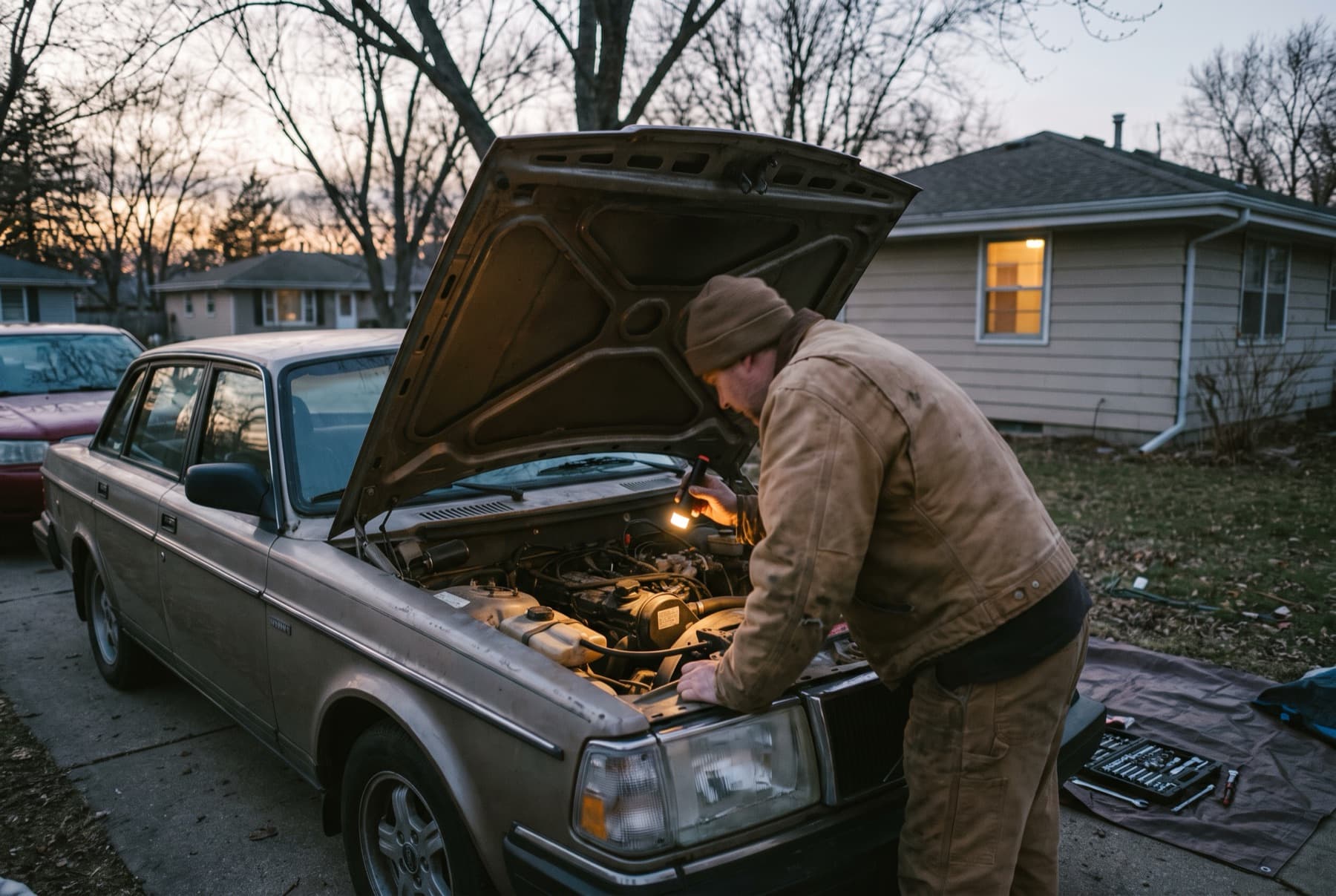
As of September 2026, a proposed class action filed in early 2026 in New Jersey federal court alleges defective piston rings make EA888 2.0T engines in 2018 and newer VW and Audi models burn and leak oil; no class has been certified and there is no settlement.

Lawsuit
Ashley Furniture protection plan
As of September 2026, there is no pending class action over Ashley Furniture protection plans; the one filed case, Grasty v. Ashley Furniture Industries, was voluntarily dismissed on December 20, 2022, and a separate $9 million Ashley mattress fiberglass settlement had its final approval hearing on September 24, 2026.

The law
Lemon Law Explained: When Your Car Qualifies and How to Get a Buyback