Jobs and wages
Lawsuit filedHospital Meal Break and Time Rounding Lawsuits: Who Qualifies and Recent Results
Nurses and hospital staff are suing over auto-deducted meal breaks and time rounding; Providence owes about $229 million. See who qualifies and what to do.

If your hospital automatically deducts a 30-minute lunch you did not actually get, or rounds your clock punches in its favor, you may be owed back pay, and nurses and hospital staff are winning these cases. The largest result so far is the Providence case in Washington, where more than 33,000 hourly workers won a judgment of nearly $230 million. Similar suits are pending against other health systems.
These cases are individual lawsuits and class or collective actions against specific employers, not one national case. Allegations against any hospital are unproven unless a court rules or the hospital settles.
Key takeaways.
- A King County jury in April 2024 awarded more than 33,000 Providence hourly workers about $98 million, doubled for willfulness to a nearly $230 million judgment that an appeals court later affirmed.
- Automatic meal deductions are legal under federal law only if workers are completely relieved of duty for the break.
- Rounding is allowed federally only if it averages out over time and does not shortchange workers.
- California's Supreme Court is still deciding in Camp v. Home Depot whether neutral rounding is legal when exact punches are recorded.
- Federal claims must be filed within 2 years, or 3 if willful; state law is often longer.
You may qualify if.
- Hourly nurses, CNAs, techs, and other staff whose pay system automatically deducts a 30-minute meal break even when the break is missed or interrupted.
- Workers expected to carry a phone, pager, or stay on the unit during unpaid meal breaks.
- Workers whose clock punches are rounded to the scheduled start or end time, so early clock-ins and late clock-outs go unpaid.
- Workers whose missed break time pushed them over 40 hours a week, who may be owed overtime rates for it.
- Workers in California or Washington, where state law adds meal break rights beyond federal law.
- Salaried exempt staff generally do not have these claims.
What to gather.
- 1Pay stubs showing hours paid, and your own record of breaks missed or cut short.
- 2Screenshots or copies of your timekeeping records (Kronos, UKG, Workday, or similar) showing actual punch times.
- 3Unit policies requiring you to stay on the floor, carry a phone, or cover patients during meals.
- 4Messages or emails about missed breaks, break relief staffing, or instructions not to cancel the auto-deduction.
- 5Any meal break waiver or attestation you signed, and any arbitration agreement.
What hospital meal break and rounding lawsuits are about
Automatic meal deductions
Many hospital timekeeping systems subtract 30 minutes from every shift over a set length for an unpaid meal. The problem is that nurses and techs often eat at the nurses' station, get called back to a patient, or skip the break entirely. Unless the worker cancels the deduction, the missed break goes unpaid.
Time rounding
Rounding changes actual punch times to a round number, often the nearest quarter hour. A worker who clocks in 7 minutes early to take report may be paid as if they arrived on time. Rounding is lawful under federal rules only if, over time, it does not result in failing to pay workers for all the time they actually worked. Claims arise when rounding consistently favors the employer.
Why hospitals
Patient care makes uninterrupted breaks hard to take, and early arrivals and late charting are routine. That combination makes health care one of the most common industries for these claims. Related overtime issues are covered on our unpaid overtime lawsuit page.
Recent hospital meal break and rounding cases
| Case | Court | Result or status |
|---|---|---|
| Bennett v. Providence | King County, Wash. | Nearly $230 million judgment, affirmed |
| Wilburn v. Onslow Memorial | E.D.N.C. | $75,000 settlement, preliminary approval |
| Asante Health System | Jackson County, Ore. | Class action filed March 2026 |
| Camp v. Home Depot | Cal. Supreme Court | Rounding question pending |
Providence (Washington)
Naomi Bennett, a certified nursing assistant, filed a class action in September 2021. Providence rounded punches to the nearest 15 minutes and automatically deducted 30 minutes for a meal period. The court found liability on summary judgment, and in January 2024 Judge Averil Rothrock found the violations willful. On April 18, 2024, a jury awarded about $90.3 million for missed second meal breaks and $9.3 million for rounding, less about $1.3 million for workers who waived second breaks. Doubled under state law and with interest, the judgment came to nearly $230 million. The Washington Court of Appeals affirmed.
Onslow Memorial (North Carolina)
Nurse Denia Wilburn sued over meal breaks deducted even when overnight maternity unit staff had to stay on the unit. Judge Terrence Boyle preliminarily approved a $75,000 settlement for 32 workers in January 2026, paying one hour of pay for every two weeks worked, capped at $2,000 per person. Final approval is still required before payments.
Asante (Oregon)
In March 2026, nurse Juniper Arthurs filed a class action seeking about $2.5 million, alleging timecard manipulation, rounding, and unpaid missed breaks. The claims are unproven.
Who may qualify for a meal break or rounding claim
You may have a claim if you are an hourly, nonexempt worker and any of these happened regularly:
- Your pay was reduced by 30 minutes for a meal you missed, cut short, or spent on duty.
- You were told to stay on the unit, keep your phone or pager, or be available to patients during your break.
- You were discouraged from canceling the automatic deduction, or told it would look bad.
- You routinely clocked in early or out late, but your pay shows your scheduled hours.
State law can add more
In California, an employer that fails to provide a compliant meal period owes one additional hour of pay at the regular rate for each workday it happens. Washington law requires a second 30-minute meal period on longer shifts, which was the largest part of the Providence award. See California wage and hour lawsuits for more on California's rules.
Who probably does not qualify
Salaried exempt employees, workers who truly took uninterrupted breaks, and workers whose rounding sometimes helped and sometimes hurt in roughly equal measure are unlikely to recover much.
What a meal break or rounding claim could be worth
Individual amounts are usually modest per shift but add up over years and across thousands of workers.
Example
A nurse paid $45 an hour who loses a 30-minute break twice a week loses $45 a week, about $4,680 over two years. If those hours push the week over 40, they are owed at the overtime rate, and federal law adds an equal amount in liquidated damages. In the Providence case, more than 33,000 workers shared a judgment of nearly $230 million, an average of roughly $7,000 per worker, though actual shares depend on hours and shifts worked.
Smaller settlements pay less. The Onslow settlement caps each worker at $2,000. For how class funds are divided and how fees come out, see how class action money is divided and why payouts can be smaller than expected.
The law on meal breaks and rounding
- 29 C.F.R. 785.19: a bona fide meal period is not work time only if the employee is completely relieved from duty. An employee who must perform any duties, active or inactive, while eating is not relieved.
- Labor Department Fact Sheet #53: if a health care worker's meals are interrupted so that the meal period is predominantly for the employer's benefit, the worker should be paid for the full 30 minutes.
- 29 C.F.R. 785.48(b): rounding to the nearest 5 minutes, tenth, or quarter hour is accepted only if it averages out so workers are fully paid over time.
- Fair Labor Standards Act: unpaid time that creates overtime is owed at time and a half, plus liquidated damages.
California cases
In Donohue v. AMN Services (2021), the California Supreme Court held that employers cannot round meal period punches and that time records showing a missed, short, or late meal break create a rebuttable presumption of a violation. In Camp v. Home Depot, pending since review was granted in February 2023, the court will decide whether neutral rounding is allowed at all when exact punch times are recorded.
Automatic deduction cases are often filed as a class action under state law alongside a federal collective action. Employers often argue that whether each worker missed a break is too individual for a class, which is why unit policies and system-wide data matter.
Deadlines for meal break and rounding claims
Federal FLSA claims must be filed within 2 years of each short paycheck, or 3 years for willful violations. State law is often longer: Washington wage claims generally reach back 3 years, and California claims can reach back up to 4 years in some cases.
Each pay period starts its own clock, so older shifts drop off as time passes. If a class action is already pending against your employer, the statute of limitations for state class claims may be paused, but federal collective action claims are not preserved until you file a written consent to join.
How to check whether rounding or auto-deductions shorted you
You can often spot a problem with a simple comparison.
- Pull a pay period of punches. Many timekeeping systems let employees view their actual punches. Write down each clock-in and clock-out.
- Compare to paid hours. If you consistently clock in 5 to 7 minutes early and are paid from the scheduled start, the rounding is working against you.
- Count missed or interrupted breaks. Note each shift where your 30 minutes was cut short, interrupted by a patient call, or skipped, and whether the deduction was canceled.
- Check weekly totals. If the missing minutes push you over 40 hours in a week, the unpaid time is owed at overtime rates.
Seven minutes a shift over 200 shifts a year is more than 23 hours of unpaid time, which at $40 an hour is more than $900 a year for one worker, before any overtime or state penalties.
Travel and contract nurses
Staffing agency and travel nurses may be employed by the agency, the hospital, or both. Both may be responsible for unpaid time. Keep your agency contract, facility timekeeping records, and pay stubs from the agency.
Union members
If your job is covered by a union contract, the contract may set break rules and a grievance process. Federal and state wage rights generally still apply, but talk with your union representative and an attorney about which route to take.
What not to do
Do not alter your own punches to make up for rounding, and do not take confidential patient information to prove missed breaks. Your own notes, pay stubs, and copies of your time records are usually enough to start. If a manager asks you to sign a form saying you took breaks you did not take, you can decline or write what actually happened, and keep a copy. Complaining about pay is protected, and retaliation for raising it is illegal.
What to do now
- Log missed breaks. Each shift, note whether you got a full, uninterrupted 30 minutes, and why not.
- Check your punches. Compare your actual clock-in and clock-out times to what you were paid.
- Save policies that require you to stay on the unit or carry a device during breaks.
- Use the cancel option for missed breaks if your employer has one, and keep proof when you do.
- Do not sign a release or break attestation you disagree with.
Retaliating against workers who raise pay complaints is illegal. A free case review takes about two minutes and can connect you with independent attorneys who handle hospital wage cases. For contract nurses, see misclassification lawsuits.
Case timeline
February 25, 2021
California Supreme Court decides Donohue v. AMN Services, barring rounding of meal period punches.
September 2021
Naomi Bennett files a class action against Providence Health & Services in King County.
February 1, 2023
California Supreme Court grants review in Camp v. Home Depot on neutral time rounding.
April 18, 2024
Jury awards Providence workers about $98 million, later doubled to a nearly $230 million judgment.
January 2026
Judge Terrence Boyle preliminarily approves a $75,000 meal break settlement with Onslow Memorial Hospital.
March 2026
Nurse files class action against Asante Health System in Oregon over rounding and missed breaks.
Hospital meal break and time rounding: common questions.
Can a hospital automatically deduct lunch breaks?
Yes, but only if workers actually get a full, uninterrupted break. If a nurse works through or is interrupted during the deducted time, federal guidance says the time should be paid.
Is time rounding legal?
Under federal rules, rounding to the nearest 5, 6, or 15 minutes is allowed only if it averages out and does not underpay workers over time. California's Supreme Court is still deciding whether neutral rounding is legal when exact punch times are recorded.
How much did Providence have to pay for meal breaks?
A jury awarded about $98 million in April 2024 to more than 33,000 hourly workers. Because the violations were found willful, the award was doubled, producing a judgment of nearly $230 million that the Washington Court of Appeals affirmed.
Can nurses sue for missed meal breaks?
Yes. Hourly nurses can bring claims for unpaid time under the FLSA and state wage laws, individually or as part of a class or collective action. Records of missed or interrupted breaks are key evidence.
What is a meal break premium in California?
California employers that fail to provide a compliant meal period owe one additional hour of pay at the regular rate for each workday a violation occurs.
How far back can I claim unpaid meal breaks?
Federal claims reach back 2 years, or 3 for willful violations. State laws are often longer, such as 3 years in Washington and up to 4 years for some California claims.
Sources.
Statutes, court rules, appellate opinions, and bar publications we relied on. See our editorial standards.
- 1.Washington Court of Appeals: Bennett v. Providence Health & Services, No. 86321-5-I
- 2.Seattle Times: Providence to pay $200M for illegal timekeeping and break practices (April 20, 2024)
- 3.Nurse.org: Nurse reaches settlement with NC hospital over unpaid meal breaks (January 6, 2026)
- 4.Nurse.org: Asante Health System hit with $2.5 million class action (March 25, 2026)
- 5.Cornell LII: 29 CFR 785.19, meal periods
- 6.Cornell LII: 29 CFR 785.48, rounding
- 7.U.S. Department of Labor Fact Sheet #53: The health care industry and hours worked
- 8.Supreme Court of California: pending civil issues list, Camp v. Home Depot, S277518 (September 2026)
Related cases and settlements.
All lawsuits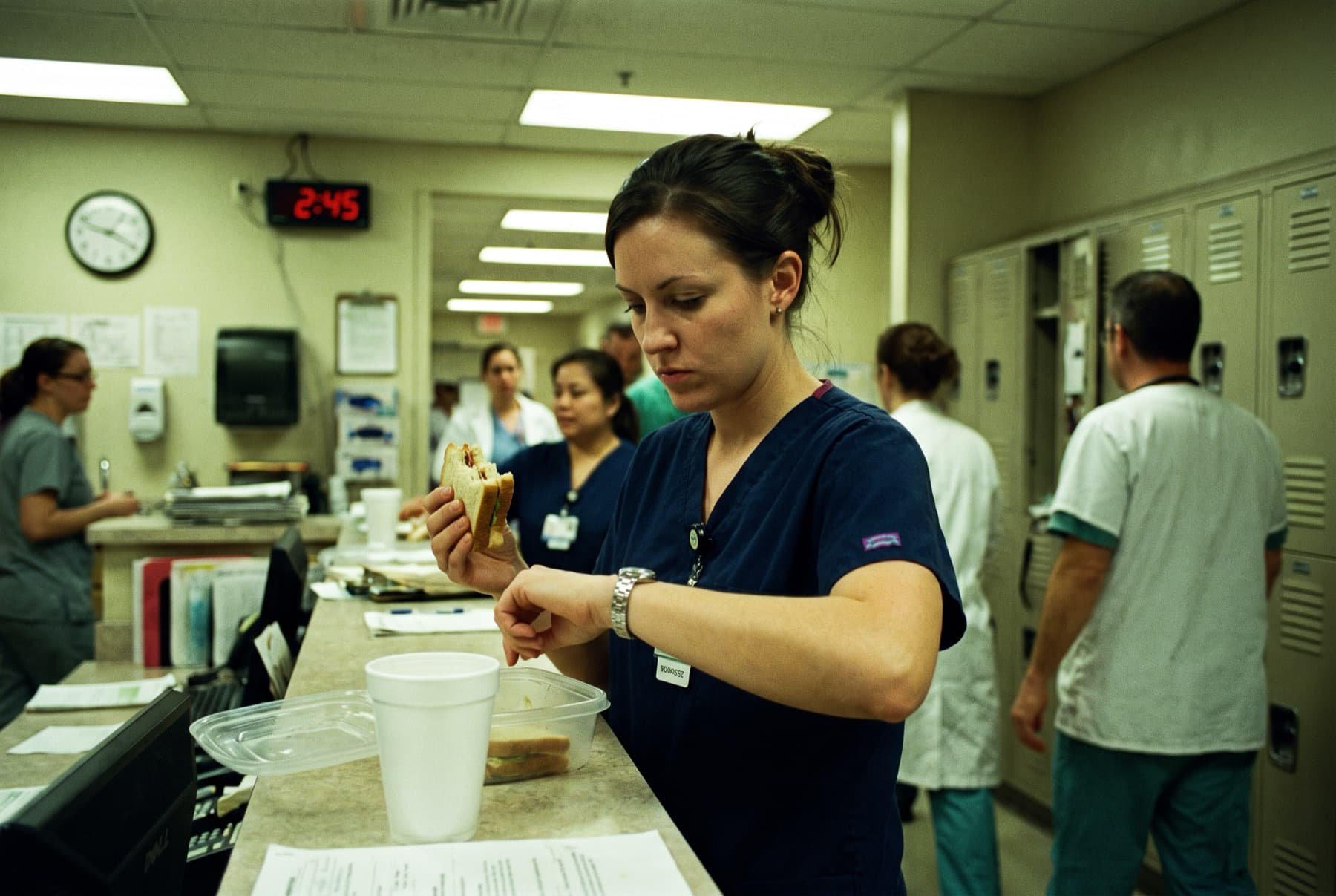
Lawsuit
Unpaid overtime (FLSA)
As of September 2026, unpaid overtime claims are filed continuously under the Fair Labor Standards Act, the federal exempt salary threshold is $684 per week after the 2024 rule was vacated, and the Labor Department recovered more than $259 million in back wages in fiscal year 2025.
Lawsuit
California unpaid wages and overtime
As of September 2026, California wage and hour class actions and PAGA claims are filed constantly, the state minimum wage is $16.90 an hour, and the Labor Commissioner continues enforcing the warehouse quota law, including a June 2024 citation of nearly $6 million against Amazon.
Lawsuit
Independent contractor misclassification
As of September 2026, misclassification cases continue under federal and state law, the Labor Department has proposed (but not finalized) a February 2026 rule to replace its 2024 contractor test, and California's ABC test still applies to most workers there.

Payouts and money
How is class action settlement money divided?