Toxic exposure
Consolidated (MDL)Paraquat Parkinson's Lawsuit: MDL 3004 Settlement and Case Status
Paraquat Parkinson's cases in MDL 3004 are in a confidential settlement, with 6,666 pending in September 2026. Exposed workers with Parkinson's may qualify.
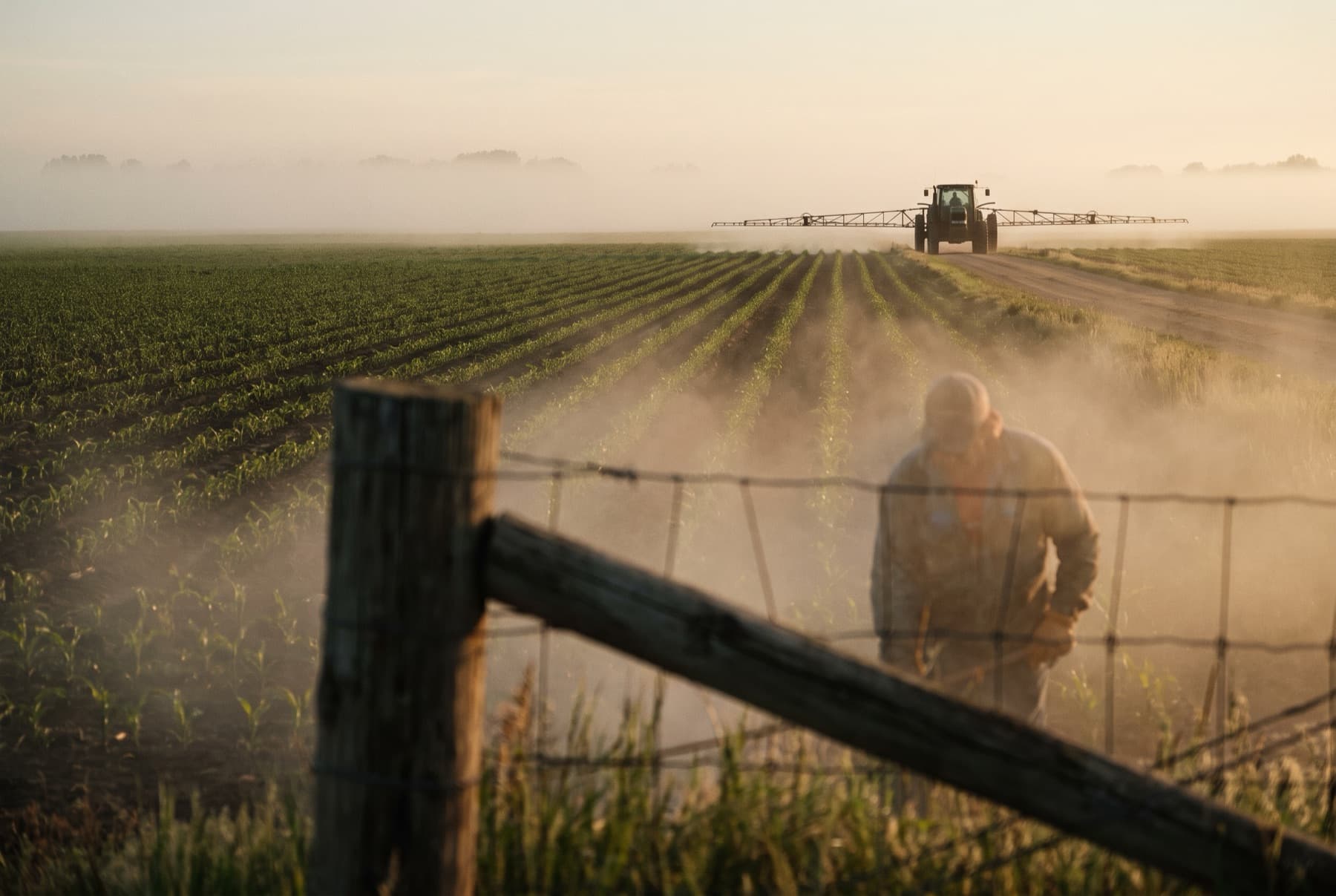
Paraquat Parkinson's lawsuits are consolidated in MDL 3004 in federal court in Illinois, with 6,666 cases pending as of September 1, 2026, and most are being resolved through a confidential 2025 settlement with Syngenta and Chevron. People who were exposed to paraquat, usually through farm work, and later diagnosed with Parkinson's disease may qualify to file a claim if their state's deadline has not passed. There is no public claim form; claims go through individual lawsuits and the settlement program.
Below: what the cases claim, where the MDL and state cases stand, who qualifies, and what to do.
Key takeaways.
- The JPML reported 6,666 cases pending in MDL 3004 on September 1, 2026, out of 8,488 filed since the MDL began in 2021.
- Plaintiffs' leadership and Syngenta and Chevron entered a Master Settlement Agreement on August 4, 2025. Its terms, including the total amount, are confidential.
- On April 17, 2024, Judge Rosenstengel excluded the plaintiffs' causation expert and dismissed the first four bellwether cases with prejudice.
- A June 12, 2026 order requires plaintiffs who reject the settlement to produce detailed exposure proof and meet with Special Master Randi Ellis, or risk dismissal.
- All paraquat products in the U.S. are restricted use pesticides that only certified applicators may use, according to the EPA.
You may qualify if.
- You were exposed to paraquat, usually by mixing, loading, or spraying it as a farmer, farmworker, or certified applicator, or working nearby.
- You were later diagnosed with Parkinson's disease by a doctor.
- You can describe your exposure in detail: years, days per year, gallons, and acres, which the court now requires from plaintiffs who continue to litigate.
- Family members of someone who died with Parkinson's after paraquat exposure may have a wrongful death claim.
- People without documented paraquat exposure, or with other movement disorders but no Parkinson's diagnosis, are unlikely to qualify.
What to gather.
- 1Medical records confirming the Parkinson's diagnosis, including the neurologist's notes and date of diagnosis.
- 2Proof of paraquat use: pesticide applicator license, purchase records, farm spray logs, employer records, or co-worker statements.
- 3Details of use: which products, years, days per year, gallons per year, and acres treated.
- 4Records of protective equipment used and any spills or skin contact.
- 5Any settlement offer letter and correspondence with your attorney, if you already have a case.
What the paraquat lawsuits claim
Paraquat dichloride is a powerful herbicide used on farms to kill weeds before planting and to dry crops before harvest. It has been sold in the U.S. for decades. The defendants in the MDL are the Syngenta companies, which make it, and Chevron U.S.A. Inc.
The lawsuits claim that repeated exposure to paraquat, through spray drift, skin contact, or breathing it in, causes or substantially increases the risk of Parkinson's disease, and that the manufacturers knew or should have known and did not adequately warn users. Plaintiffs bring claims for design defect, failure to warn, negligence, and consumer fraud.
The science is disputed. The EPA says it reviewed hundreds of studies, that studies of paraquat and Parkinson's range in quality and conflict, and that a 2020 update of the Agricultural Health Study reported no association. Plaintiffs rely on other research, including studies linking living near sprayed fields to higher Parkinson's risk. Syngenta and Chevron deny that paraquat causes Parkinson's. Those disputes are why the MDL's expert rulings mattered so much.
These are individual personal injury claims gathered in a mass tort, not a class action, so each person's recovery depends on their own exposure and diagnosis.
Where the paraquat MDL stands now
The federal cases are In re: Paraquat Products Liability Litigation, MDL 3004, No. 3:21-md-3004-NJR, before Chief Judge Nancy J. Rosenstengel in the Southern District of Illinois. The JPML created it in June 2021.
The expert ruling that reset the case
On April 17, 2024, Judge Rosenstengel ruled that the plaintiffs' general causation expert, Dr. Martin Wells, could not testify under Federal Rule of Evidence 702, and in a companion order granted summary judgment and dismissed the four trial selection cases with prejudice. Without an admissible causation expert, those bellwether plaintiffs could not prove paraquat caused their Parkinson's. The ruling was a major setback and pushed both sides toward settlement.
The 2025 master settlement
According to the court's June 12, 2026 case management order, plaintiffs' leadership counsel and the defendants entered a Master Settlement Agreement on August 4, 2025. The total amount and payment grid are confidential. The court extended stays on case deadlines repeatedly while claimants reviewed offers. In 2026, the court directed settlement administrators to give Special Master Randi Ellis information about people found ineligible, people opting out, and people who had not decided, and it has raised concerns about high opt-out rates among some firms' clients, according to case trackers.
Plaintiffs who say no
Case Management Order No. 25, entered June 12, 2026, applies to anyone who declines the settlement, is ineligible, or files a new case. It requires detailed exposure information, including days per year, time of year, total gallons, and acres treated, plus other proof, and requires those who rejected an offer to meet with Special Master Ellis within 30 days. Plaintiffs who do not comply get a 30 day cure period and can then face dismissal with prejudice. The defendants also moved in February 2026 for partial summary judgment on all failure-to-warn claims.
For how this kind of MDL works, see what an MDL is.
State court paraquat cases
Not every paraquat case is in the federal MDL. Many are in state courts, with a large group in the Philadelphia Court of Common Pleas and others in Illinois. According to case trackers, a Philadelphia bellwether trial settled in January 2026 on the eve of opening statements.
Earlier, Syngenta and Chevron resolved a group of Illinois state court cases brought by people who said paraquat caused their Parkinson's. Those confidential settlements were later reported to total $187.5 million, a rare public data point on what paraquat claims have been worth. That figure covered a handful of plaintiffs with strong exposure histories and should not be read as a typical individual payout.
State cases follow their own schedules and rules, and whether a state case can join the master settlement depends on its terms and the lawyers involved. If you already have a lawyer, ask which court your case is in and whether you received an offer.
Who qualifies for a paraquat Parkinson's claim
The core requirements are exposure and diagnosis:
- Exposure. Most claimants mixed, loaded, or sprayed paraquat, or worked in fields shortly after it was applied. Because all paraquat products in the U.S. are restricted use pesticides that only certified applicators may use, applicator licenses and farm records are often the best proof of exposure.
- A Parkinson's diagnosis from a physician, ideally a neurologist.
- Timing. The exposure came before symptoms, and you are within your state's filing deadline.
People who lived near sprayed fields but never handled the chemical sometimes pursue claims, but those are harder to prove. People with essential tremor, drug-induced parkinsonism, or other conditions that are not Parkinson's disease generally do not qualify. Family members of someone who died may be able to bring a wrongful death claim, depending on state law.
How the paraquat settlement process works for claimants
Because this is a private master settlement rather than a class action, there is no public claim website and no single filing deadline announced to the public. The process runs through the lawyers who represent each claimant.
- Enrollment. A claimant's lawyer submits the case to the settlement program with medical and exposure records.
- Eligibility review. Settlement administrators decide whether the claim qualifies. Some claimants are found ineligible, often because of weak exposure proof or a diagnosis that does not meet the program's criteria.
- Offer. Eligible claimants receive an offer based on the program's confidential criteria.
- Accept or decline. Claimants who accept release their claims in exchange for payment. Those who decline must follow CMO 25 and meet with Special Master Randi Ellis.
The court has been unusually involved. According to case trackers, in April 2026 the judge ordered administrators to give the special master information on ineligible claimants, those opting out, and those undecided, and in June 2026 the court selected about 10% of opt-out cases for limited discovery. CMO 25 gives a plaintiff who falls short of its evidence requirements a 30 day cure period before the court may dismiss the case with prejudice.
Before accepting, ask your lawyer for the gross offer, the fee percentage, case expenses, and any medical liens, so you know the net amount. Paraquat is also becoming harder to buy: case trackers report that Syngenta said it would end global production by June 2026, and that Vermont became the first state to ban it in June 2026. That does not change past exposure claims, but it shows how much the product's status has shifted.
What paraquat settlements pay
The MDL settlement is confidential, so there is no official amount per person. Case trackers report rumored averages in the range of $100,000 to $110,000 per claimant, but that has not been confirmed by the court or the parties, and individual amounts depend on factors such as the strength of exposure evidence, age at diagnosis, and severity.
Settlement payments are also reduced by attorneys' fees and case expenses, and sometimes by liens from health insurers or Medicare that paid for Parkinson's treatment. Anyone who turns down an offer takes on real risk given the 2024 expert ruling and the court's June 2026 order requiring detailed proof. See whether these cases are worth it and class action vs. mass tort.
Parkinson's disease is progressive and expensive to live with. Claims typically value medical costs such as neurology visits, medication, and physical and speech therapy, along with lost income for people who had to stop farming or working, the cost of home care, and pain and suffering. A person with a long and well documented history of mixing and spraying paraquat generally presents a stronger claim than someone with limited or indirect exposure. If Medicare or a state Medicaid program paid for treatment, it usually has a right to be repaid from a settlement, so expect that step before final payment. Settlement money for a physical injury is generally not taxed as income; see taxes on settlements and ask your own tax adviser.
The law and deadlines behind paraquat claims
Paraquat claims are state-law product liability claims: design defect (the product was unreasonably dangerous), failure to warn (labels did not disclose a Parkinson's risk), negligence, and consumer protection violations. Proving causation requires admissible expert testimony, which is exactly what failed in the 2024 bellwether cases.
Federal pesticide law is also a factor. The Supreme Court's June 2026 decision in Monsanto v. Durnell, a Roundup case, held that the Federal Insecticide, Fungicide, and Rodenticide Act expressly preempts a state failure-to-warn claim that would require a manufacturer to add a warning the EPA did not require on an approved pesticide label. The Court decided only that claim, and it relied on an earlier ruling treating design defect and similar claims as outside labeling preemption. The paraquat defendants had already asked Judge Rosenstengel for summary judgment on failure-to-warn claims, and that ruling makes those claims harder.
Deadlines vary by state and usually run from diagnosis or from when you knew or should have known paraquat might be the cause. In California, for example, a personal injury claim generally must be filed within two years under Code of Civil Procedure section 335.1. Parkinson's develops slowly, so the start of the statute of limitations is often disputed.
What to do now
- Confirm the diagnosis and get copies of your neurology records.
- Document exposure in the detail the court now requires: years, days per year, time of year, gallons, and acres. Find applicator licenses, receipts, and spray logs.
- Find witnesses such as co-workers, employers, or family who saw you mix or spray paraquat.
- If you have an offer, read it carefully and ask your lawyer about the risks of declining, including the June 2026 requirements and the meeting with the special master.
- Act before your deadline if you have not filed yet. Your state's clock may already be running from the date of diagnosis.
- Keep treating. Ongoing neurology care both protects your health and documents how the disease affects your daily life.
A free case review takes about two minutes. You can also read about the Roundup cancer lawsuit, another weed killer case, or browse other lawsuits you may be able to join.
Case timeline
June 7, 2021
JPML centralizes federal paraquat cases as MDL 3004 in the Southern District of Illinois.
April 17, 2024
Judge Rosenstengel excludes the plaintiffs' causation expert and dismisses four bellwether cases.
August 4, 2025
Plaintiffs' leadership and Syngenta and Chevron enter a confidential Master Settlement Agreement.
February 11, 2026
Court enters CMO 23 after defendants move for summary judgment on all failure-to-warn claims.
June 12, 2026
CMO 25 sets evidence requirements for plaintiffs outside the settlement.
September 1, 2026
JPML reports 6,666 cases pending in MDL 3004.
Paraquat Parkinson's: common questions.
Is there a paraquat lawsuit settlement?
Yes. Plaintiffs' leadership in MDL 3004 and Syngenta and Chevron entered a Master Settlement Agreement on August 4, 2025. The total amount and individual payment amounts are confidential, and the defendants deny that paraquat causes Parkinson's.
How much is the paraquat settlement per person?
No official figure has been released. Case trackers report rumored averages of about $100,000 to $110,000, but individual amounts depend on exposure evidence, diagnosis, and other factors, and fees and liens reduce net payments.
Who qualifies for the paraquat lawsuit?
Generally, people who mixed, loaded, sprayed, or worked around paraquat and were later diagnosed with Parkinson's disease, and who file within their state's deadline. Strong proof of exposure, such as applicator licenses and spray records, is important.
What is the status of paraquat MDL 3004?
As of September 1, 2026, 6,666 cases were pending in MDL 3004 before Chief Judge Nancy J. Rosenstengel. Most are going through the 2025 settlement, and plaintiffs who decline must meet strict evidence requirements under a June 2026 order.
Why were paraquat bellwether trials cancelled?
On April 17, 2024, the judge excluded the plaintiffs' main causation expert under Rule 702 and dismissed the four bellwether cases with prejudice because they could not prove causation without him.
Can I still file a paraquat lawsuit?
Possibly, if your state's deadline has not run. New cases filed in the MDL must meet the court's June 2026 evidence requirements, and settlement eligibility depends on the agreement's terms.
Sources.
Statutes, court rules, appellate opinions, and bar publications we relied on. See our editorial standards.
- 1.JPML: Pending MDL Dockets by Actions Pending (September 1, 2026)
- 2.In re Paraquat, Memorandum and Order excluding Dr. Wells (April 17, 2024)
- 3.In re Paraquat, Order granting summary judgment in trial selection cases (April 17, 2024)
- 4.In re Paraquat, Case Management Order No. 23 (February 11, 2026)
- 5.In re Paraquat, Case Management Order No. 25 (June 12, 2026)
- 6.EPA: Paraquat dichloride
- 7.Lawsuit Information Center: Paraquat settlement amounts and updates
- 8.Supreme Court: Monsanto Co. v. Durnell, No. 24-1068, slip opinion (June 25, 2026)
- 9.California Code of Civil Procedure section 335.1
Related cases and settlements.
All lawsuitsLawsuit
Roundup cancer (NHL)
As of September 2026, a Missouri judge is weighing final approval of Monsanto's up to $7.25 billion Roundup class settlement after a September 14, 2026 fairness hearing, while 3,925 federal cases remain in MDL 2741 after the Supreme Court's June 2026 Durnell ruling.
Lawsuit
AFFF firefighting foam
As of September 2026, MDL 2873 had 15,264 pending cases before Judge Richard M. Gergel in South Carolina; water system settlements exceeding $12 billion are approved, but no personal injury settlement or bellwether trial date exists.

Lawsuit
PFAS water contamination
As of September 2026, PFAS water claims are proceeding in MDL 2873 and in state and federal courts, with multibillion-dollar settlements for utilities and states but no nationwide settlement for individual residents; EPA has proposed pushing some compliance to 2031.
Lawsuit
Ethylene oxide cancer
As of September 2026, hundreds of individual ethylene oxide suits are pending in Georgia state courts against Sterigenics (Cobb County), BD and C.R. Bard (Covington), and other sterilizers, following a $20 million Georgia verdict in 2025; there is no global settlement.